Beyond the Wave
Duo Show — Takeshi Igawa / Masanori Maeda
The Japanese contemporary art scene is made of remarkable diversity. Both subjects and media greatly vary among artists, going beyond the common perception of Japanese art mainly composed of figurative paintings, colourful patterns or work inspired by animation and pop culture worlds.
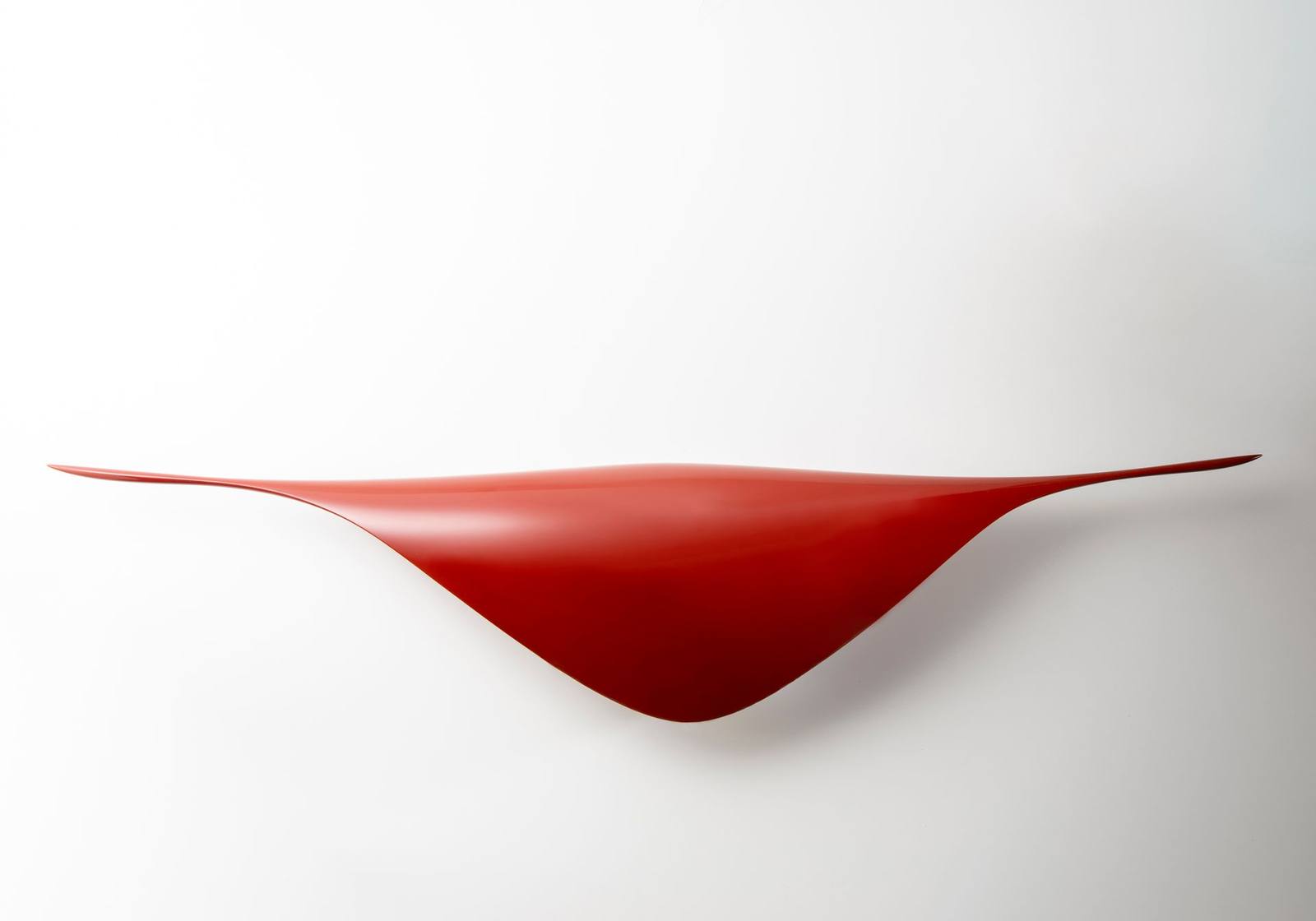
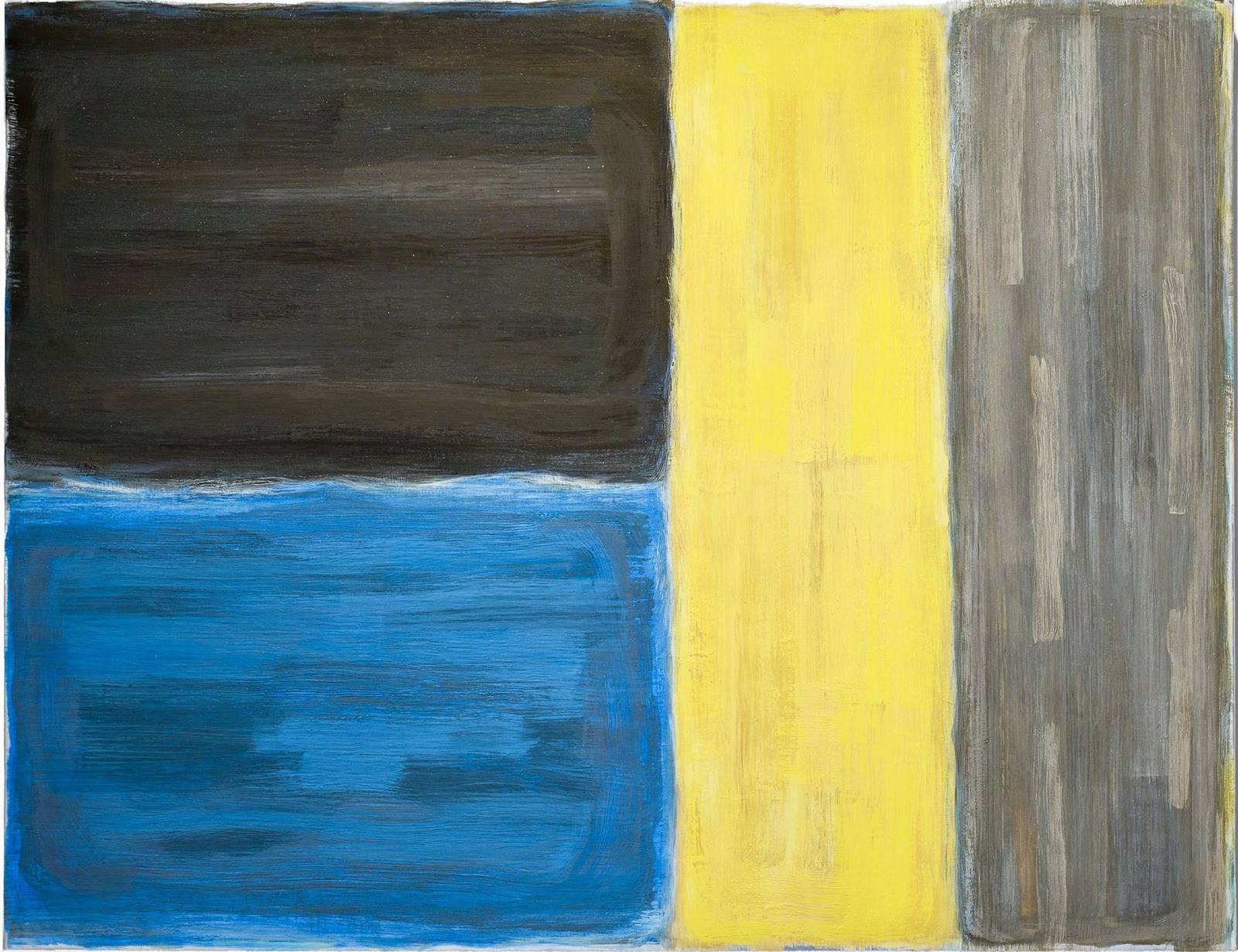
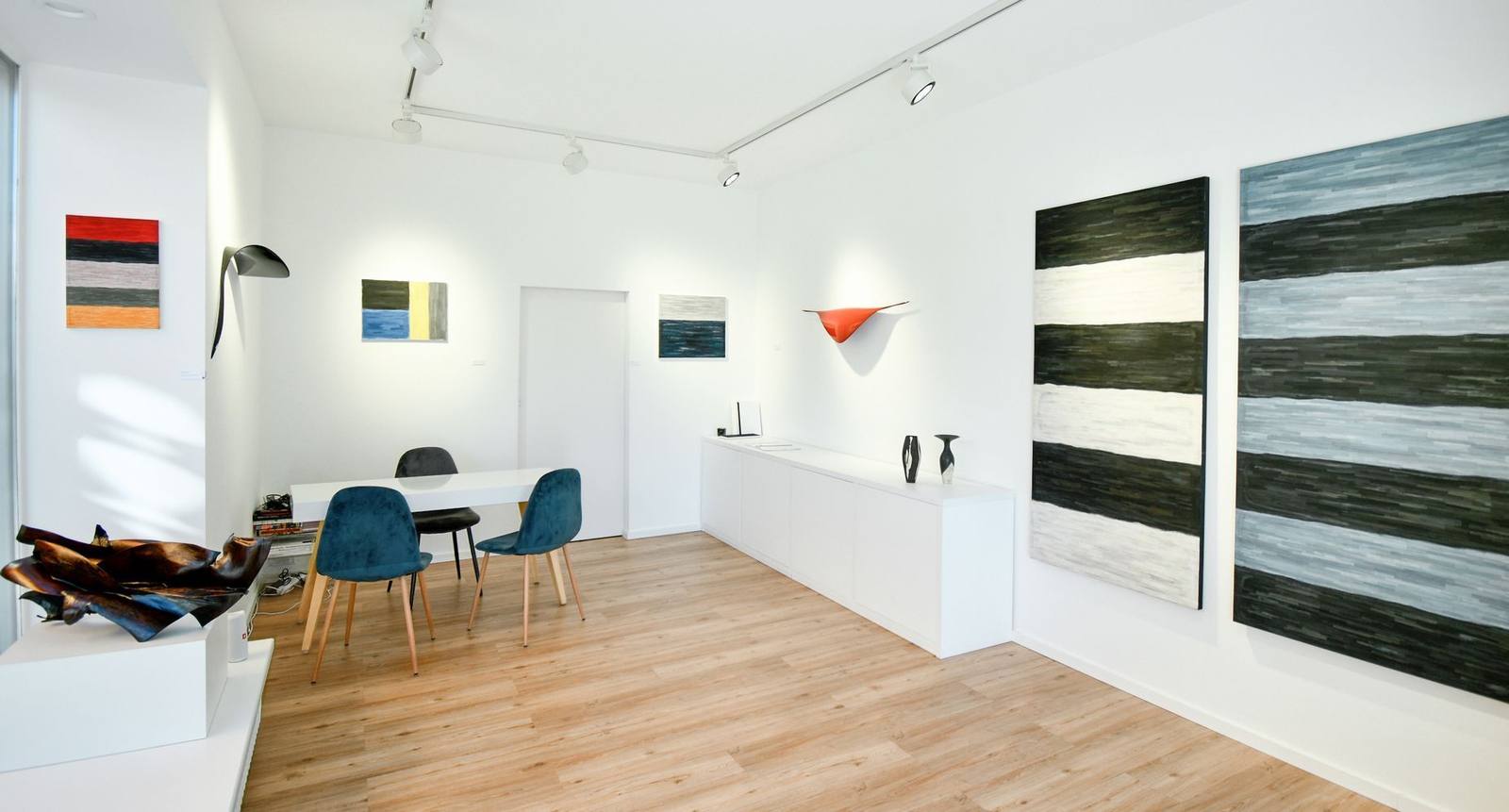
The two artists presented by AIFA for its 2nd winter show at the Verbier gallery, Takeshi Igawa and Masanori Maeda, use long-established techniques in painting and traditional urushi to create abstract works combining traditional know-how and contemporary designs.
In his creation process Takeshi Igawa first focuses on lines before determining their respective edges. Time is then spent on perfecting the carved shape to “fully express the beauty of lacquer once lines and surfaces perfectly harmonize”. His shapes break with traditional lacquer work while applied colours remain within the tradition of urushi. Playing with shapes, exploiting the natural virtues of lacquer, its deep lustre, and mastering fundamental polishing methods is what pushes Takeshi into his own art boundaries and beyond. His work might be seen as the combination of a sculptor’s preoccupations with the eye of a painter working on light and shadows.
Urushi, also called Japanese lacquer, has been mastered and extensively used by craftsmen from Japan and China since the neolithic era; an ancestral technique that continues to be transmitted across generations of lacquer artists. As the material itself is formless, it needs a surface to build on, reason why it was mainly used to cover utilitarian objects such as bowls, cups, boxes, and furniture. The turning point occurred in the 1950s when for the first time a lacquer sculpture without any utilitarian characteristics was exhibited.
Fusing traditions of Japanese ink painting, pigments, and washi, known as Japanese paper, with unusual materials such as aluminium leaves and metal mud, Masanori Maeda creates distinct works within the abstraction movement. His creations combine bold brushwork with a lyrical delicacy.
The term nihonga was created in the 1880s, during the Meiji era, to distinguish ancient and traditional Japanese painting from Western-style oil painting; it literally means “Japanese painting”. Conventionally, materials used at that time were paper, silk or wood and, for painting, ink, mineral, or other natural pigments. Although trained in nihonga, several artists from following generations chose to combine traditional techniques with new materials in a more conceptual manner. Masanori Maeda creates abstract works representing a seamless balance between traditional techniques and unconventional materials.