Traces
Group Show — Yui Uchida / Shin Masaharu / Sayuri Ikake
A trace may refer to the existence of something or the sign that it used to exist. As vestiges of an ancient civilisation, it suggests the outcome of any experience or learning through memory, know-how and cultural legacy; but it also alludes to a mark left on an item, something drawn or even a handprint.
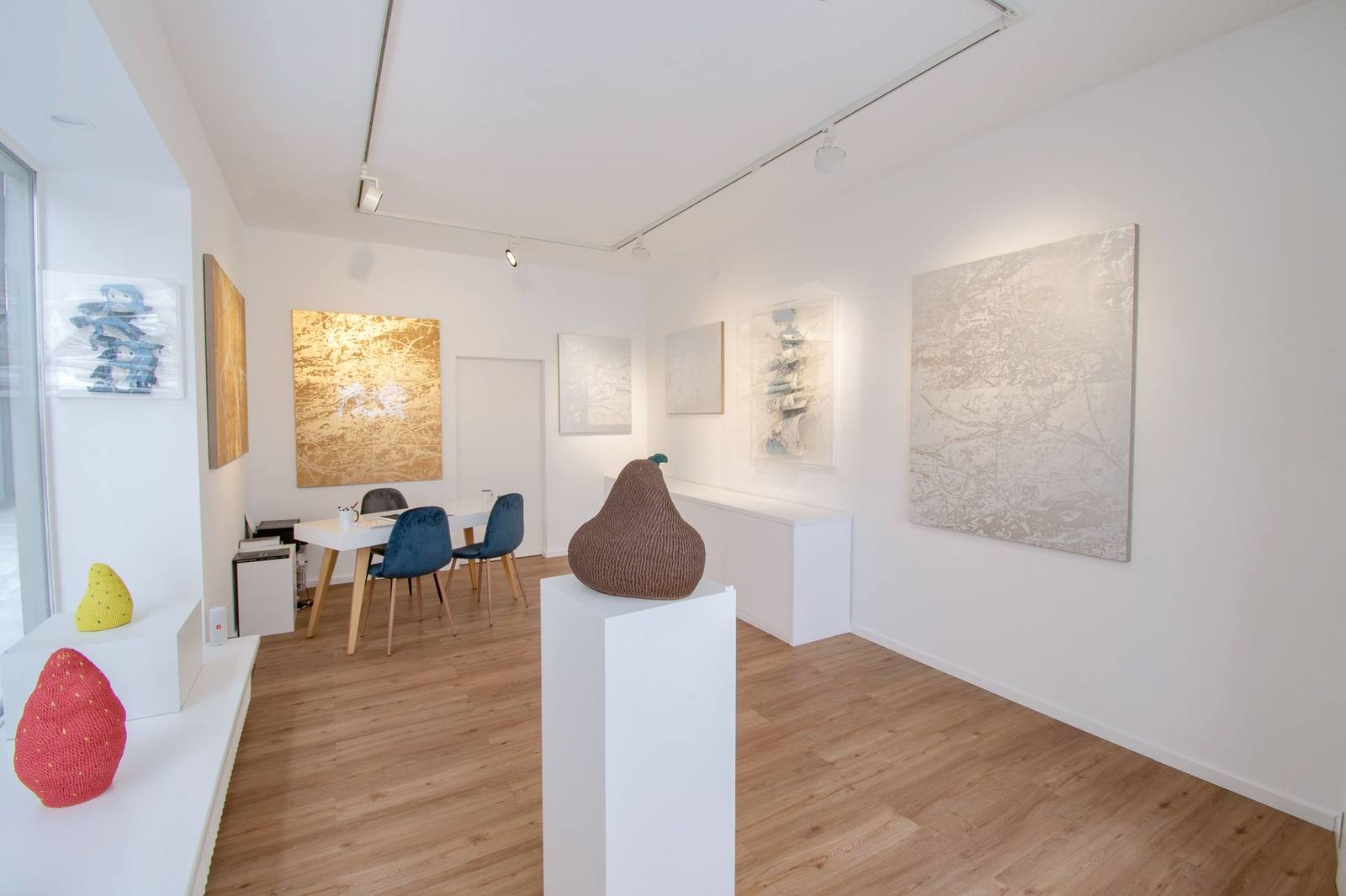
This third exhibition at the Verbier art gallery features the work on different mediums from three contemporary Japanese artists and explores the theme of traces. Ultimately, whether by process of elimination or, to the contrary, by making them visible and part of the work, an artist by the act of creation will leave his or her trace.
Yui Uchida — Animated film’s drawings | From legacy to a new mode of painting
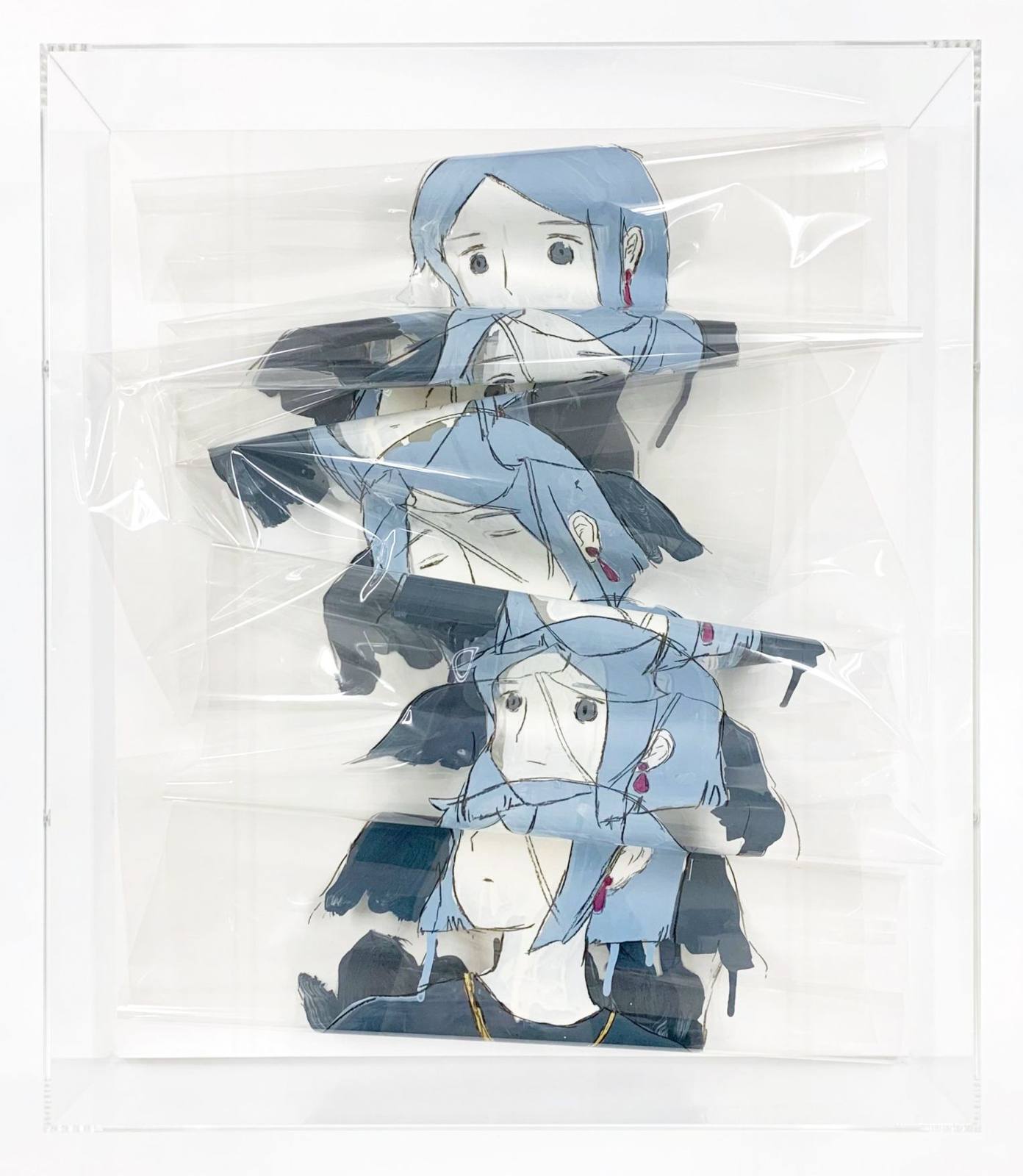
Yui Uchida is part of the young contemporary Japanese art scene. Her artistic world is inspired by the animated films she discovered at an early age and is the result of experimentation.
Her works on transparent film paintings are a nod to cel paintings but her aim is not to preserve an artistic technique but to use it to explore a new mode of painting and to render motion within one frame. She expresses it, within a box, by the depiction and decomposition of a movement that could be compared to a sequence of an animation. She amplifies it even further by the wavy wrinkles of the polyester film that render the impression of reliefs.
On a traditional canvas painting, the artist realises the background first and finishes with the detail. Yui Uchida creates her paintings on the back of the transparent film; her technique is then reversed and may lead the viewer to discover the picture by the other side of the screen. The acrylic box is an indivisible part of the work itself and has two meanings; it first refers to a cell’s membrane without which an organism could not survive, second it is also linked to the transparent barriers erected to prevent the spread of viruses.
Shin Masaharu — Silkscreen | Erasing traces of the artist’s hand
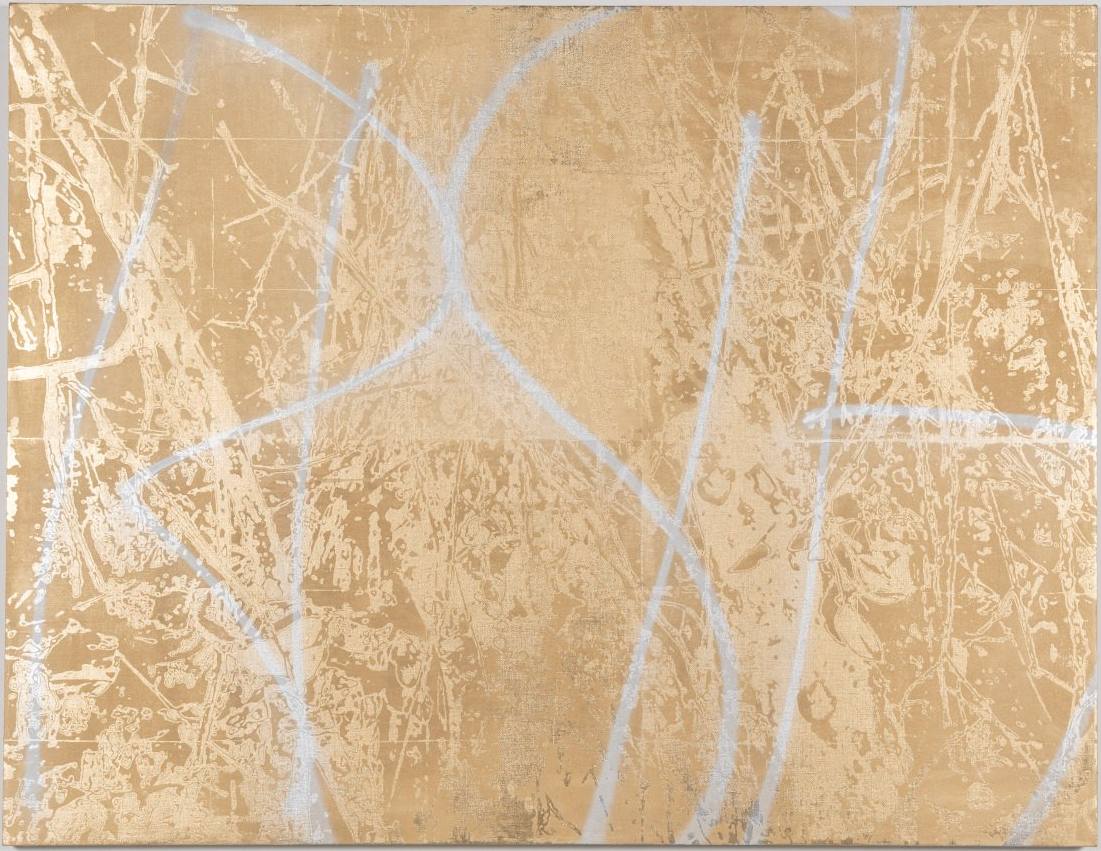
Shin Masaharu is part of the young contemporary Japanese art scene but shares subject matters and contexts with artists from other countries and cultural backgrounds. He avoids being prisoner of the legacy or the cultural identity framework. His approach to art questions the significance of art in society and how it has evolved over time.
His recent works question the value given to gold or silver in our societies both in terms of cultural tradition and intrinsic value. Therefore, in his series called Kohama Island, Shin Masaharu uses the gold colour as the use of gold leaves reflects traditional Japanese painting.
His paintings have both gold leaf patterns and mirror motif effects; in fact they are not the true reflection of reality but merely an illusion. Through his work the artist questions the relationship between the pattern and the painting as genuine and fake. Creating his work using a semi-industrial method with the silkscreen process, he erases traces of the artist’s hand; however his work is also a mirror of his mind, and that is why he includes shadows of his personal memory and episodes of his private life within his creations.
Sayuri Ikake — Hands and porcelain | Blurring the borders between art and craft
Both historically and conceptually fuelled, ceramic is a material that fascinates artists, increasingly threatening the well-known diktat that makes a distinction between craft and fine art. In a world where digital imagery is ever more supposed to overwhelm our everyday life, ceramic creations reconnect us with the material; a straight link to Earth.
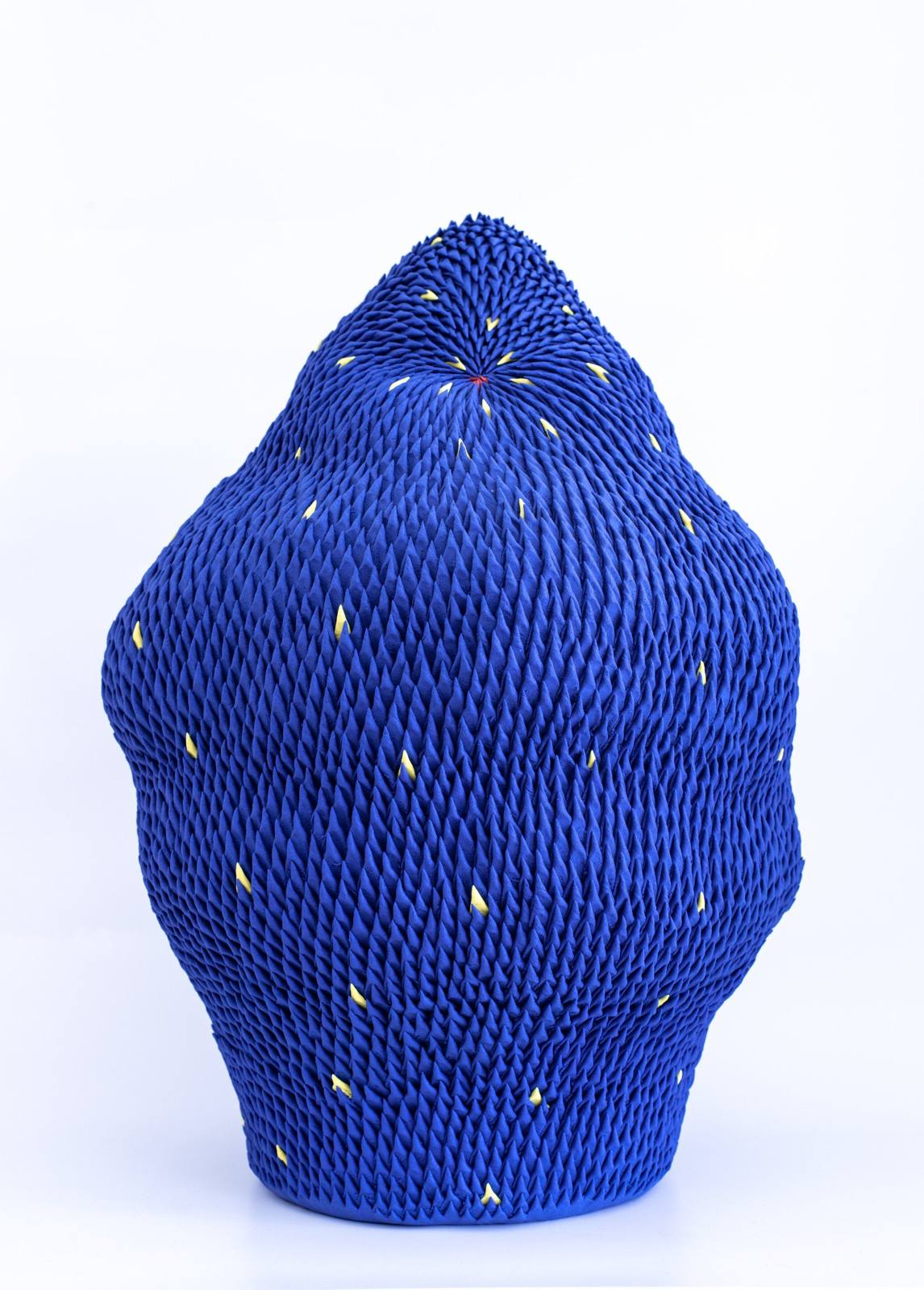
The potter’s wheel, with its origin going back several thousand years, soon attracted Sayuri Ikake. After years of experimentation, she developed her way of expression combining traditional techniques with her own mix of clay and pigments to create original works that are remarkable both for their shapes and their colours.
Using the potter’s wheel, she creates several pieces that she then combines to give birth to a form that is a translation of her mental conceptualisation and the concrete trace of her inner world. She creates thorns in her palm and then manually plugs them one by one on the base, letting visible marks on her creations. With this singular technique, she is able to give movement to her artworks, and describes it as being the breathing of the shape.